

An outdoor dining area only earns its keep if it is easy to reach. In a barn conversion the kitchen usually opens through a set of wide doors, and there is often a small step or raised threshold between inside and out. That step decides whether you eat outside every warm evening or three times a summer, since nobody wants to carry a tray of glasses over a wobbly edge.
Aim to set the table within ten to fifteen metres of the kitchen, on the same level where possible. If the ground falls away, use a deck or two or three wide, shallow steps rather than one awkward drop. Firm clay pavers, York stone or compacted gravel are far kinder to a loaded tray than loose bark, and they stay usable after rain. Grass looks lovely but holds dew into the morning and turns to mud by October.
Watch the sun before you commit: a spot on the south or west side of the barn gives long evening light.
Barns tend to sit high and exposed, and wind funnels along the longest wall. Shelter turns a table into a room, but it should never fight the view.
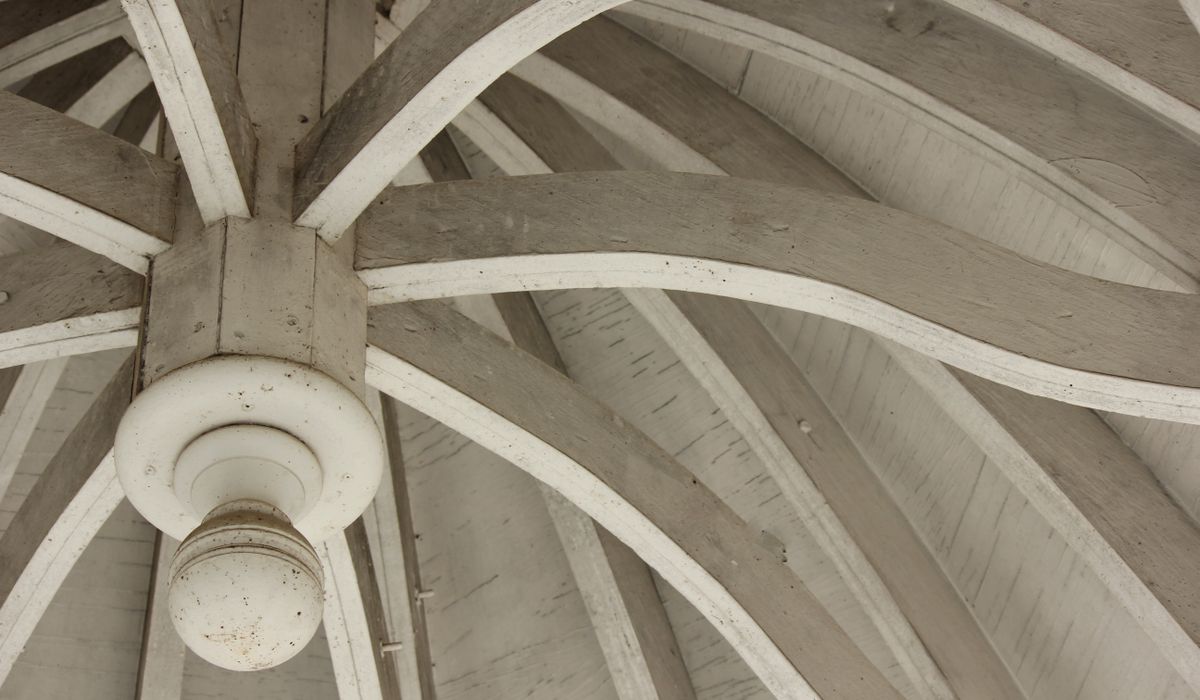
A pergola is the most versatile answer. A structure of around three by four metres, with slatted rafters rather than a solid roof, throws dappled shade in summer, lets light rain through and reads as part of the garden. A grape vine or scented climbing rose at one corner will soften the frame within two seasons.
For wind, work in layers:
Keep the downwind side open, so you keep the view and the breeze on a hot day.
Rural settings are hard on furniture, so buy for a decade rather than a season.
Choose a table that seats six comfortably rather than eight tightly, allowing about 75cm of table edge per person. Add a lockable bench or slim store nearby for cushions and lanterns, because a long walk to the shed is what stops people using a space.
The best evenings outdoors start before sunset and end long after it. Plan lighting in layers and keep the colour warm: anything around 2700K flatters timber, stone and faces, while cooler white light makes a barn garden look like a car park.
For warmth, a fire pit or chiminea at the edge of the seating extends the season from April to October. Site it on a non-combustible base, clear of the pergola and climbers, and check the smoke drifts away from the table. Patio heaters work, but they drink energy; a fire, a wool throw and a decent jacket are better.
Planting does quiet work around a dining area: it screens, scents and softens hard edges. Fill generous pots beside the table with rosemary, thyme, lavender and oregano, so a hand can reach out mid-meal. Ornamental grasses such as Stipa tenuissima and Molinia move in the slightest breeze and hold their shape into winter.
Keep anything within a metre or two of the table low and unprickly; taller planting belongs at the edges, where it can screen without dropping debris into the salad.
Storage is what makes the space usable in the shoulder months. A bench with a lift-up lid, a weatherproof box under the pergola or a cupboard built into the wall gives you somewhere for cushions, candles and a tablecloth. Put a hook by the door for a folded throw, and you will use the space from March to November rather than June to August.
What separates a table on a patio from a proper outdoor dining room is mostly small things: an outdoor rug or a run of decking underfoot, a side table for bottles, a jug of water, a candle in a storm lantern.
Finally, keep it ready. If the table is clear, the cushions are dry and the lights come on with one switch, you will eat outside on a Tuesday in May for no reason at all, which is rather the point of living in a barn in the countryside.

Sleekbarn Real stories, useful guides and the occasional recommendation, all in one calm corner of the web.

Sleekbarn No rushing, no fuss — just thoughtful notes and practical help, written by people who care.

Septic tanks need regular emptying and careful use. Avoid harsh chemicals, monitor levels and book annual checks to prevent costly rural drainage problems.

Comments
ALina Kelian
19th May 2018 ReplySleekbarn We spend our time finding what works so you don't have to, and sharing exactly what made the difference. ullamco laboris nisi ut aliquip ex ea commodo consequat.
Rlex Kelian
19th May 2018 ReplySleekbarn No rushing, no fuss — just thoughtful notes and practical help, written by people who care. ullamco laboris nisi ut aliquip commodo.
Roboto Alex
21th May 2018 ReplySleekbarn We spend our time finding what works so you don't have to, and sharing exactly what made the difference. ullamco laboris nisi ut aliquip ex ea commodo consequat.