

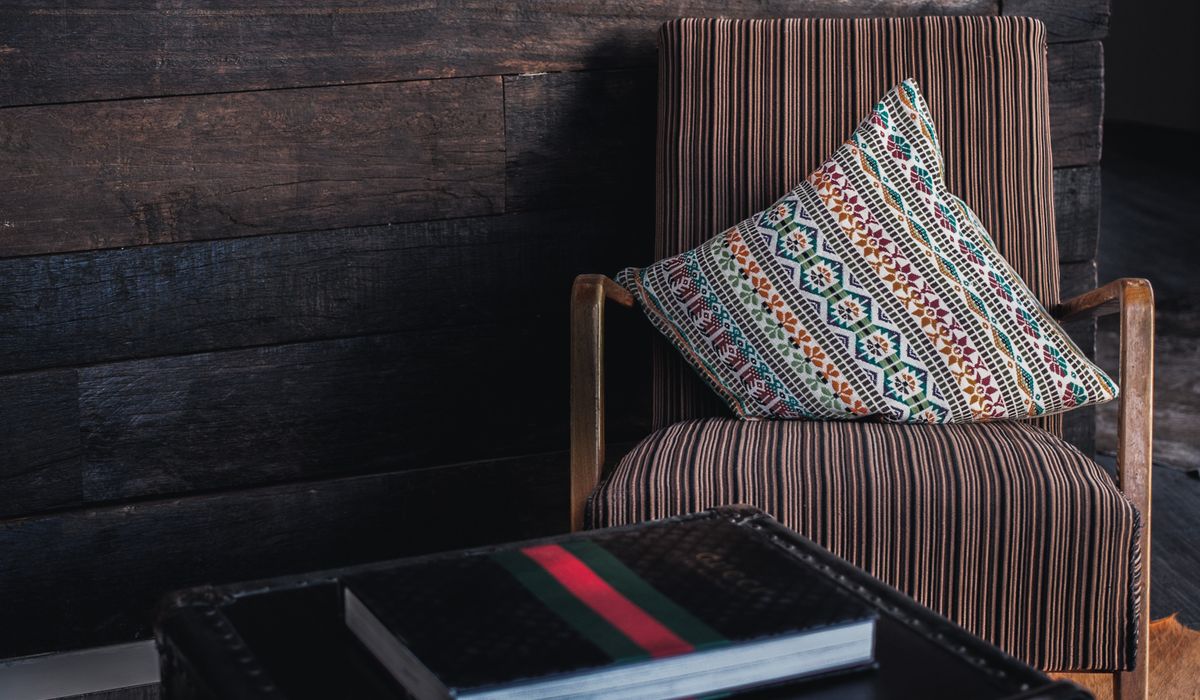
Barns are generous with space and light, and that generosity is exactly why a reading corner needs a little planning. A converted barn often gives you a double-height ceiling, a wall of glazing and a long open-plan stretch that swallows warmth and sound in equal measure. The result is magnificent, but it can be an unforgiving place to sit still with a book for an hour. The answer is not to fill the space with furniture. It is to carve out a small, deliberately sheltered pocket within the larger volume — somewhere that feels like a room inside a room.
Get that pocket right and the rest of the barn can stay as open and dramatic as you like. Get it wrong, and you will find yourself reading at the kitchen table instead.
Location does most of the work here, so walk the barn at different times of day and note where the draughts travel and where the sun lands. A few principles are worth following.
This is the one piece worth spending properly on. Look for a deep, high-backed armchair — a wing chair is ideal, as the wings cut draughts and shield your face from side light. Check the seat height, roughly 45cm is comfortable for most people to get out of gracefully, and aim for a seat depth of around 55 to 60cm so you can tuck your legs up. Arms should be high enough to rest your elbows on while holding a book.
Fabric matters more than you might expect. Wool, bouclé and heavy linen blends feel warm on first contact; smooth leather can feel chilly until it has warmed through, which is fine in summer and less so in January. Add a footstool, ideally one that matches the chair's height when your feet are up, and choose a model with a slight recline rather than a bolt-upright back. If you are tall, prioritise back height so your head is genuinely supported. Test any chair with a book and a mug in hand before committing.
A single overhead fitting will not serve a reading corner. You want layers: a focused pool of light on the page, a softer glow behind it, and as much dimmability as you can manage.
Stone, timber and glass bounce sound and hold cold, so textiles are doing structural work as well as decorative. Start from the floor with a rug large enough that your feet and the chair's front legs sit on it, and add an underlay — it makes a surprising difference underfoot.
Then layer upwards. A wool throw over the chair back, a sheepskin on the seat in winter, a couple of cushions in contrasting weaves. Chunky knit against velvet against linen gives the corner depth and invites you to stay. Heavy curtains, or a door curtain hung across a draughty barn opening, will cut both chill and echo. A well-stuffed draught excluder at the base of a door is unglamorous and quietly effective. Soft furnishings absorb sound, so the corner will feel calmer than the open room around it.
A side table of around 40 to 45cm across is the right size for a mug, a small plate and a book without becoming a dumping ground. A basket or a low stack of books beside the chair keeps favourites to hand. Make sure there is a socket within reach for the lamp, and think about where a phone or e-reader will charge.
Finish with one thing that pleases you — a candle, a small vase, a framed print on the wall behind. Then spend an evening in the corner before you decide it is finished. You will quickly learn whether the lamp needs to move two inches, the footstool needs to come closer, or a cushion is required at your lower back. Adjust once, and the corner will earn its place in the barn for years.

Sleekbarn Real stories, useful guides and the occasional recommendation, all in one calm corner of the web.

Sleekbarn No rushing, no fuss — just thoughtful notes and practical help, written by people who care.

Low maintenance rural gardens rely on drought-tolerant plants, gravel mulch and simple shapes. Reduce lawn and choose robust materials for windy sites.

Comments
ALina Kelian
19th May 2018 ReplySleekbarn We spend our time finding what works so you don't have to, and sharing exactly what made the difference. ullamco laboris nisi ut aliquip ex ea commodo consequat.
Rlex Kelian
19th May 2018 ReplySleekbarn No rushing, no fuss — just thoughtful notes and practical help, written by people who care. ullamco laboris nisi ut aliquip commodo.
Roboto Alex
21th May 2018 ReplySleekbarn We spend our time finding what works so you don't have to, and sharing exactly what made the difference. ullamco laboris nisi ut aliquip ex ea commodo consequat.